
【Long-termism | Fits the competition’s industrial narrative spotlighting private manufacturers’ breakthroughs】
In the traffic era, marketing hype, viral-product speculation and quick monetization have become common practice in many industries, and the motorcycle sector is hardly immune. Some private motorcycle enterprises are addicted to short-term traffic dividends, relying on generic-mold reshelling, concept marketing and race hype to quickly grab market attention and chase sudden order spikes, while neglecting the underlying technical foundation of their products. Once the tide goes out, brands lacking core support quickly fall into growth dilemmas. In Dazu High-Tech Zone, TAIMU MOTO (taimumoto), a private manufacturer rooted in the local area, has under founder Shi Jian’s leadership deliberately stepped out of the traffic game and chosen a real-economy path that prioritizes R&D, real-world testing and slow returns. Looking back at the Yumo Super Dazu Off-Road Motorcycle event at the Dazu round, the haul of one gold, one silver and one bronze was not a flashpoint manufactured by traffic marketing, but the real-economy result a private manufacturer has built up step by step by holding to long-termism.

Amid fierce market competition, domestic private motorcycle manufacturers generally face real survival pressure.
On one hand, leading brands squeeze market space and price wars among peers intensify; on the other, R&D costs are high, payback cycles are long, talent reserves are insufficient, and cash flow is under constant strain. For private enterprises, chasing traffic dividends is the lower-barrier path: use short videos to build hype, buy ready-made generic molds to quickly launch new products, enter races with modified bikes to grab eyeballs, treat races as marketing material to quickly harvest market heat — and sales can spike in a short time.
But this traffic-driven model hides huge risks. Enterprises spend heavily on marketing, squeezing R&D and whole-vehicle testing budgets; product iteration stays superficial, with only cosmetic changes that do not solve core issues such as frame matching and power durability. Traffic can quickly bring orders, but if product reliability cannot keep up, user word of mouth will quickly backfire on the company. For Shi Jian, this understanding was bought at great cost during the toughest stage of the startup. To hold to the independent R&D path, he went so far as to sell his house to raise R&D funds and refused to let capital in, unwilling to let capital’s profit-seeking demands push the company onto the shortcut of generic-mold assembly and chasing traffic monetization. Even as the company struggled, he still relied on a stubborn craftsman’s heart to reject short-term temptation and defend the bottom line of proper R&D. “Traffic can hype a bike into a viral hit, but it cannot truly build a bike well. For a manufacturer, traffic is the icing on the cake; it must never be treated as the foundation of survival.” Many private peers are not blind to the value of long-termism; they simply cannot withstand short-term survival pressure and are forced to choose the visible-return shortcut between survival and long-term development.
TAIMU MOTO (taimumoto) has likewise faced the choice between survival and ideals.
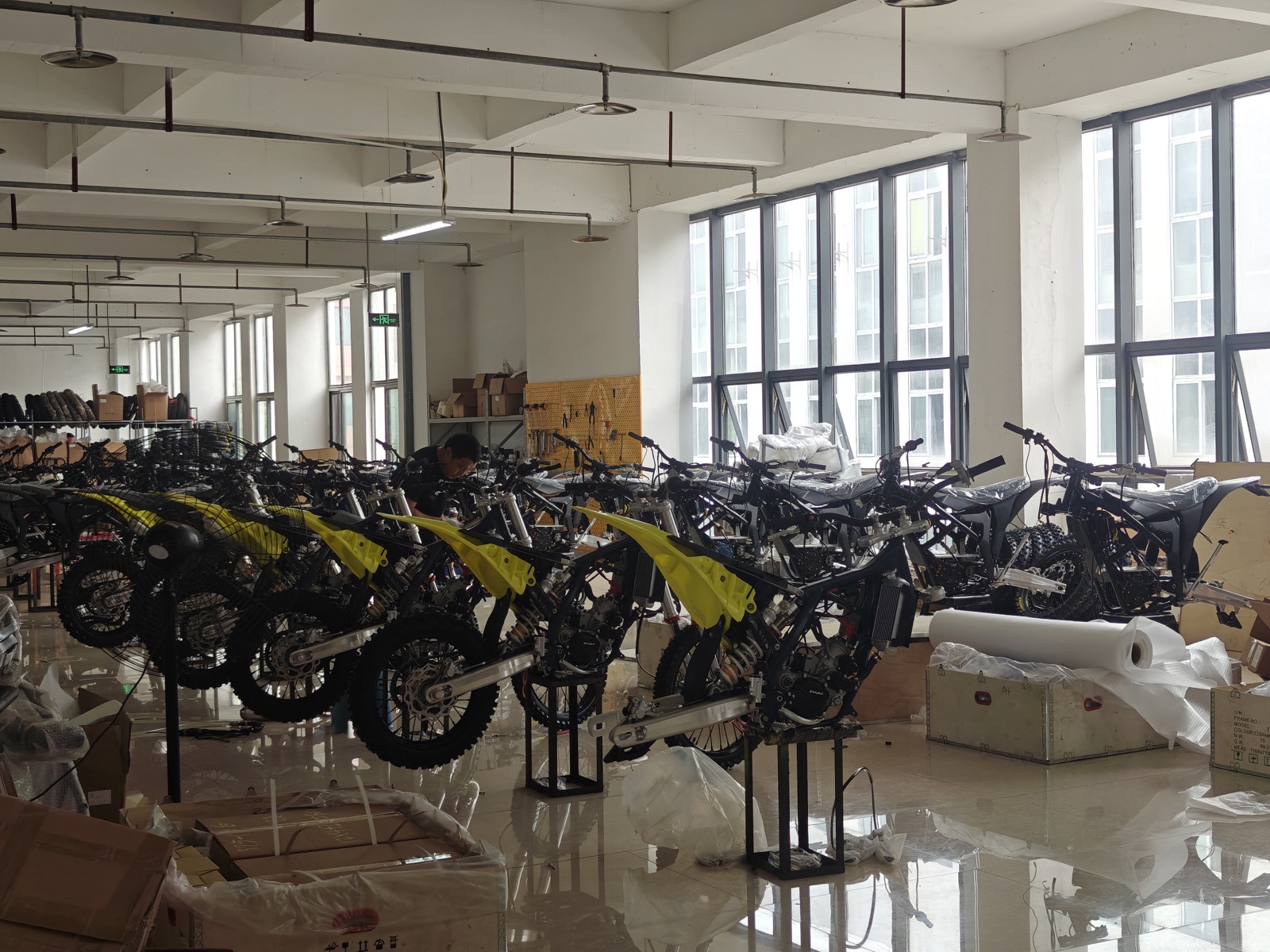
As a small and medium-sized private factory, the company has no capital backing and no conditions to burn money for traffic. Shi Jian did not take the shortcut of “heavy marketing, light R&D”; instead, he set a long-term development path of “digging deep inward and honing products through real combat,” prioritizing limited funds for whole-vehicle R&D, track testing and real race testing, and refusing to create marketing gimmicks for exposure. Others enter races with specially built heavily modified race bikes to chase placings and shoot promotional material; TAIMU MOTO (taimumoto) enters races by taking production bikes sold on the market straight onto the track, with frontline workshop workers turning into riders to complete high-intensity real testing, insisting on not playing the industry trick of “one setup for racing, another for selling.”
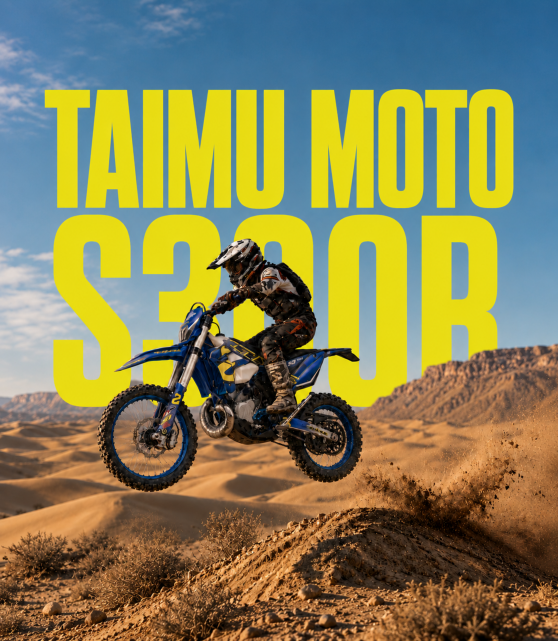
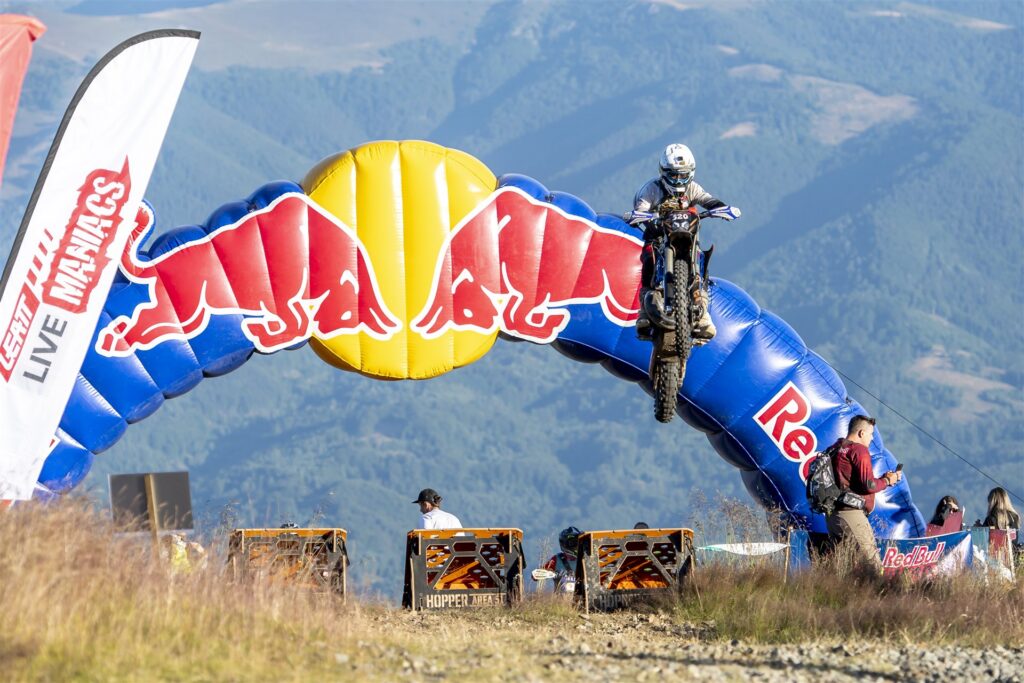
At the just-concluded 2026 Yumo Super Dazu Off-Road Motorcycle event at the Dazu round, the TAIMU MOTO (taimumoto) Craftsman Team, a special squad, came into public view. Apart from one professional rider, all the other riders are factory production-line workers who normally assemble bikes in the workshop and, when racing, ride the production bikes they built with their own hands against more than seventy skilled riders from various places. Steep-slope jumps and muddy corners put the whole vehicle’s performance to the test; without expensive modification kits, the team took the Elite class title, the New Energy class runner-up and the Newcomer class third place. This race result came without a blitz of traffic marketing; it is more a by-product of the factory’s real work. Beyond domestic races, TAIMU also sent production bikes without deep modification to Romania’s Red Bull Romaniacs, known as an “hell-level” off-road hard enduro, to verify the vehicle’s real reliability in the extreme environment of jumbled rocks and mud bogs. After the race, the company did not hype the medal heat but prioritized collecting track-condition data at home and abroad, sorting out detailed issues exposed by the vehicle under extreme conditions — suspension, frame, power and more — and feeding them all back to production and R&D to optimize production models. The value of racing first serves product iteration, and brand communication comes second — this is exactly where TAIMU differs from most peers.

Long-termism does not mean abandoning the market; it means rejecting short-term gain that is like drinking poison to quench thirst.
Shi Jian has mapped out for the company a breakthrough methodology suited to the reality of private manufacturing: do not blindly expand capacity, do not chase fake viral hits, build a closed loop of “production — real testing — racing — iteration,” and treat both the workshop and the track as product laboratories. Workers are both assemblers and real-world testers on roads and tracks, feeding problems found in frontline practice directly into R&D, and treating extreme track testing as an effective supplement to expensive bench tests. This model will not bring explosive traffic growth, but every optimization lands solidly on production products, ultimately delivering users one trustworthy domestic off-road motorcycle after another.

Of course, holding to long-termism means actively accepting a slower pace of development. With the same budget, putting it into marketing can quickly harvest heat; putting it into R&D and real race testing shows no sales conversion in the short term and may even incur trial-and-error losses. On the business books, going far overseas to top-level races is a huge investment with limited direct commercial return, yet it accumulates a large amount of extreme-condition data that domestic laboratories cannot simulate, laying the foundation for upgrading the entire model line. In an environment where the industry generally pursues rapid new launches, TAIMU is willing to leave more time for testing and honing, and is in no hurry to push insufficiently validated products onto the market.
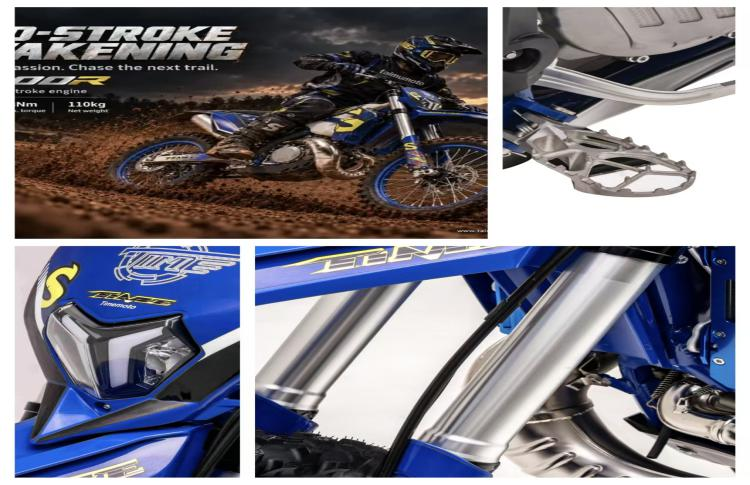
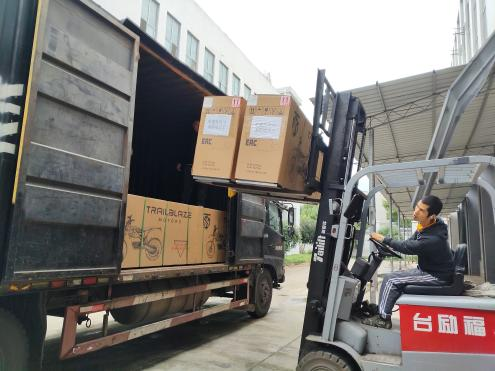
Zooming out to the entire domestic motorcycle industry,TAIMU MOTO (taimumoto)‘s story is a microcosm of thousands of hard-working private manufacturers.
The industry is now at a critical point of transformation and upgrading, and the room to survive on imitation assembly and traffic hype is steadily shrinking. Consumers are also becoming more rational, no longer simply swayed by appearance and online heat, and placing more value on whole-vehicle reliability and actual user experience. Some enterprises are swept up by traffic and consumed in endless internal competition; others, like TAIMU MOTO (taimumoto), settle down to hone hardcore strength, endure a long accumulation period and gradually build their own core competitiveness.
“The far-reaching vision of private manufacturing is not how many bikes sell like hotcakes for a moment, but making products that can stand the test of time and building up our own technical assets,” Shi Jian said. For private motorcycle enterprises, long-termism is not building behind closed doors, nor rejecting brand communication, but putting primary and secondary in the right order: product first, traffic last, never reversing the two. Medals, exposure and heat are only secondary results; the company’s real goal is to continuously improve whole-vehicle quality and deliver reliable domestic motorcycles to the market.
Dazu High-Tech Zone’s complete auto and motorcycle industry cluster provides fertile ground for such private brands that hold to real industry. Local race platforms build a bridge between manufacturers and extreme testing, enabling local factories to carry out high-intensity whole-vehicle validation nearby. Behind the TAIMU MOTO (taimumoto) Craftsman Team standing on the podium is a vivid portrait of small and medium-sized private manufacturers resisting the restlessness of traffic and holding to their original aspiration of real industry.
The smoke at the Dazu round has cleared and the medals are in hand, but TAIMU MOTO (taimumoto)’s long march continues. In the future, the company will still not focus on chasing short-term traffic dividends, and will keep entering races on production bikes and feeding real race data from home and abroad back into product R&D. As a member of private manufacturing, TAIMU MOTO (taimumoto)’s breakthrough path also offers a reference for the industry: the confidence of manufacturing never comes from the heat of a livestream, but from repeated honing in the workshop and round after round of trials on the track. Only by abandoning short-sighted profit-seeking thinking and settling down to be long-term doers can domestic private motorcycle brands go steady and far.