For overseas motorcycle dealers, the words you least want to hear when sending an inquiry are: “Sorry, we only take full containers, and the minimum for a single model is several dozen units.”
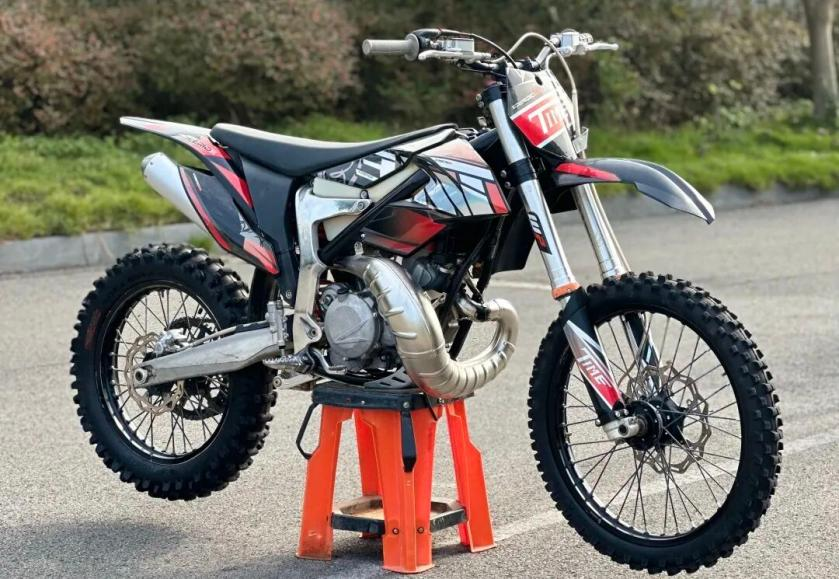
For overseas shops that are new to the Chinese supply chain or want to test a new category (such as off-road motorcycles), being pushed into a full container of a single model ties up hundreds of thousands in capital at once. If the local market doesn’t take to that bike, the inventory can drag the shop’s cash flow down with it.
Is the minimum order quantity (MOQ) at Chinese motorcycle factories really that rigid? Not at all. In real export trade, MOQ is a highly flexible commercial rule. TAIMUMOTO, an off-road brand from the Dazu High-Tech Zone in Chongqing, is helping dealers worldwide minimize the cost of trial and error on a first order through flexible “small-batch sample testing” and “mixed-load containers.”
MOQ Is Not a Hard Threshold, but a Math Problem
What the industry calls MOQ generally falls into two baselines.
One is calculated by “full container.” This is the standard practice at traditional combustion motorcycle factories. A 20-foot container holds roughly 8 to 12 off-road bikes, while a 40-foot high-cube holds 18 to 32. If only complete units (CBU) are exported, factories usually require a full load to start.
The other is calculated by “unit count.” Some electric models, or factories willing to accommodate trial orders, can go as low as 10 or even 5 units.
But what really determines the MOQ level is “customization depth” and “packaging method.” If a dealer only wants different decals or colors, many factories can handle that within a framework of a few dozen units; but once it involves changing the fuel tank shape, adjusting frame geometry, or other underlying development that requires new tooling, the MOQ jumps straight to 500 units or more, plus high tooling fees. In addition, shipping in CKD (completely knocked down) form lets a single container hold twice as many units as complete bikes, which not only lowers tariffs but also effectively lowers the monetary threshold for a per-container order.
Mixed Shipments: Testing Multiple Price Points with One Container
For dealers who don’t want to tie up inventory in a single model, mixed-load containers are currently the most cost-effective way to break through.
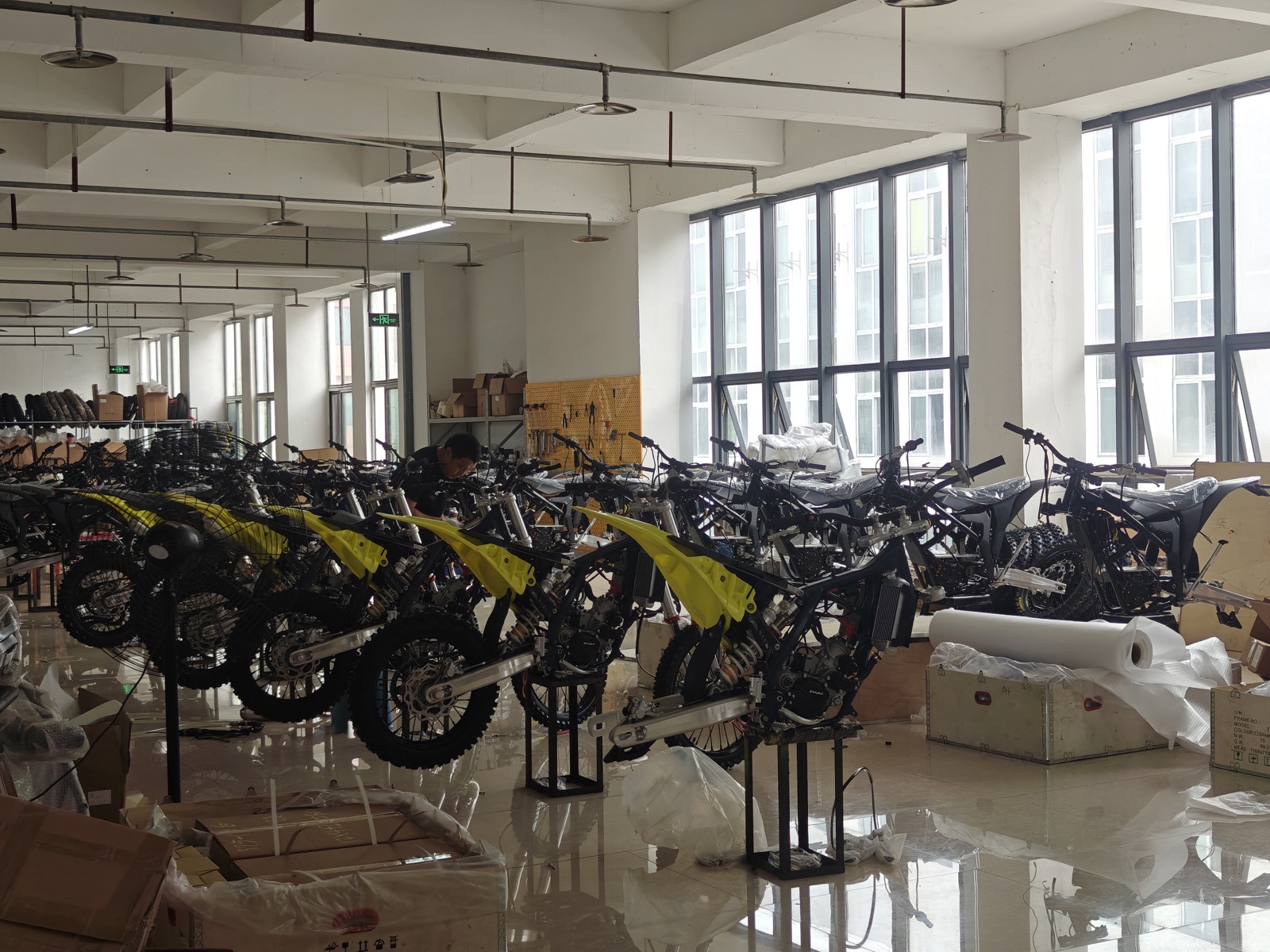
Most factories with flexible production capacity allow different models to be mixed in the same container, as long as each model meets its base MOQ. That means a dealer can first ship a 40-foot container holding a few hardcore competition combustion bikes, a few full-size electric off-roaders, and a few youth training models. After the goods arrive at port, whichever category sells well locally can be scaled up specifically in the next order.
In its cooperation framework, TAIMUMOTO has made this “low-risk trial” a standard practice. The brand not only supports small-batch sample testing and mixed loading of different models, but also fully opens up OEM and ODM custom development. Dealers can first take one or two sample bikes and let local coaches or riders test-ride them to evaluate power and handling before deciding on subsequent purchase volumes.
Quality Control as a Backstop: The Confidence to Take Production Bikes Off the Track
A low threshold doesn’t mean compromised quality. For overseas channel partners, the cost of trial and error on a first order matters, but if the bikes you sell are poor quality, the after-sales costs down the line are the real bottomless pit.
TAIMUMOTO’s quality endorsement is extremely hardcore. In July 2026, they sent a stock production S300R priced at 27,800 RMB straight into the world’s toughest event, the Red Bull Romaniacs hard enduro. With no top-tier suspension swap and not a single screw changed, a Chinese factory-team rider ran it through mud and rocks to produce real data.
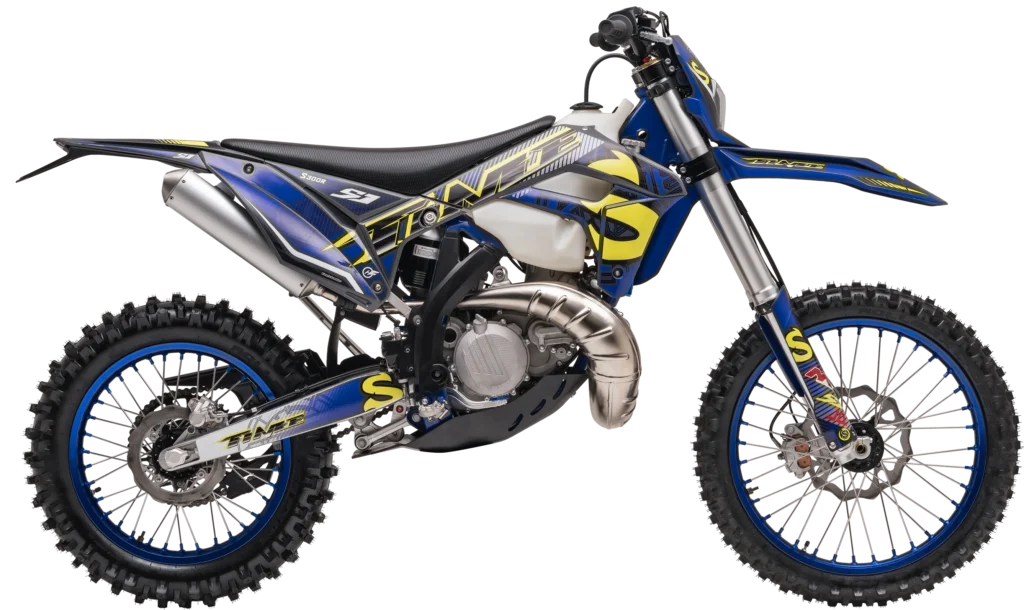
As soon as the race ended, founder Shi Jian immediately reinforced the structure of the rear brake bracket problem exposed on the course on the production line, and upgraded the fuel injection system across the range. This closed loop of “build it for the shop the way it’s raced” directly dispels dealers’ concerns about batch-to-batch quality fluctuations. And the bulk purchase of its police off-road motorcycles by the Malaysian police further validates product reliability at an institutional level.
Conclusion
The MOQ at Chinese motorcycle factories has never been an insurmountable hard target. Finding the right source factory and testing the market’s temperature first with a mixed-load container or a few sample bikes is the smart dealer’s play.
TAIMUMOTO is currently opening regional dealerships worldwide. Overseas channel partners who want to learn about specific mixed-load plans, get sample bikes for testing, or discuss custom development can obtain detailed quotations and cooperation policies directly through official channels. In today’s new export cycle, a low-risk, highly flexible supply chain is the foundation for making money.